Friday, 30 August 2024

Colour change in chameleons


 Many chameleons, and panther chameleons in particular, have the remarkable ability to exhibit complex and rapid colour changes during social interactions such as male contests or courtship. It is generally interpreted that these changes are due to dispersion/aggregation of pigment-containing organelles within dermal chromatophores. Here, combining microscopy, photometric videography and photonic band-gap modelling, we show that chameleons shift colour through active tuning of a lattice of guanine nanocrystals within a superficial thick layer of dermal iridophores.

Combining histology, electron microscopy and photometric videography techniques with numerical band-gap modelling, here we show that chameleons have evolved two superimposed populations of iridophores with different morphologies and functions: the upper multilayer is responsible for rapid structural colour change through active tuning of guanine nanocrystal spacing in a triangular lattice, whereas the deeper population of cells broadly reflects light, especially in the near-infrared range. This combination of two functionally different layers of iridophores constitutes an evolutionary novelty that allows some species of chameleons to combine efficient camouflage and dramatic display, while potentially moderating the thermal consequences of intense solar radiations.

Monday, 19 August 2024

Plant animal

Plant animal
Elysia chlorotica, a sacoglossan sea slug found off the East Coast of the United States, is well-known for its ability to sequester chloroplasts from its algal prey and survive by photosynthesis for up to 12 months in the absence of food supply.

Many species of sacoglossan sea slugs are able to intracellularly sequester chloroplasts from their algal food, a phenomenon known as kleptoplasty, that is not observed in other clades of animals.
 Elysia chlorotica, where the kleptoplasts are obtained from the filamentous alga Vaucheria litorea, is particularly interesting because it can retain functional chloroplasts in the cells of its digestive diverticula and survive without food supply for ten months to one year


Friday, 9 August 2024

Iridisense


"Iridisense" refers to iridescence, a phenomenon where the surface of a material appears to change color based on the angle of view or illumination. In butterflies, this effect is commonly observed on their wings.

Structural Coloration: Unlike pigments that absorb certain wavelengths of light, iridescence in butterflies is caused by microstructures on their wings that interfere with light. These microscopic structures, often made of chitin, create patterns that reflect and refract light, producing vibrant colors that can shift depending on the angle of observation. 

Morpho Butterflies: One of the most famous examples, Morpho butterflies have bright blue wings that appear to shimmer and change color as they move. The iridescent effect is due to tiny scales on their wings that reflect specific wavelengths of light.Common Blue (Polyommatus icarus): Another example is the Common Blue butterfly, which exhibits a stunning blue iridescence on its wings.

This phenomenon is not just a visual delight but also a subject of study in biomimicry, where researchers attempt to replicate the iridescent structures in various technologies, such as color-changing materials or more efficient solar panels.

Thursday, 8 August 2024

FRACTALS

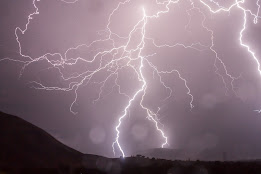
Fractals are intricate patterns that repeat at different scales, and they can be found abundantly in nature. Fractals are found all over nature, spanning a huge range of scales. We find the same patterns again and again, from the tiny branching of our blood vessels and neurons to the branching of trees, lightning bolts, and river networks. Regardless of scale, these patterns are all formed by repeating a simple branching process.


Lightning occurs when there is a buildup of electrical charge, typically between clouds or between a cloud and the ground. The electrical discharge follows the path of least resistance through the atmosphere, which is not a straight line but a highly irregular path due to variations in air resistance, humidity, and other factors.


In both plants and animals, fractal patterns in vascular systems (such as blood vessels or leaf veins) ensure that resources are delivered efficiently to all parts of the organism, reducing the energy required for transport.


Colour change in chameleons

   Many chameleons, and panther chameleons in particular, have the remarkable ability to exhibit complex and rapid colour changes during so...